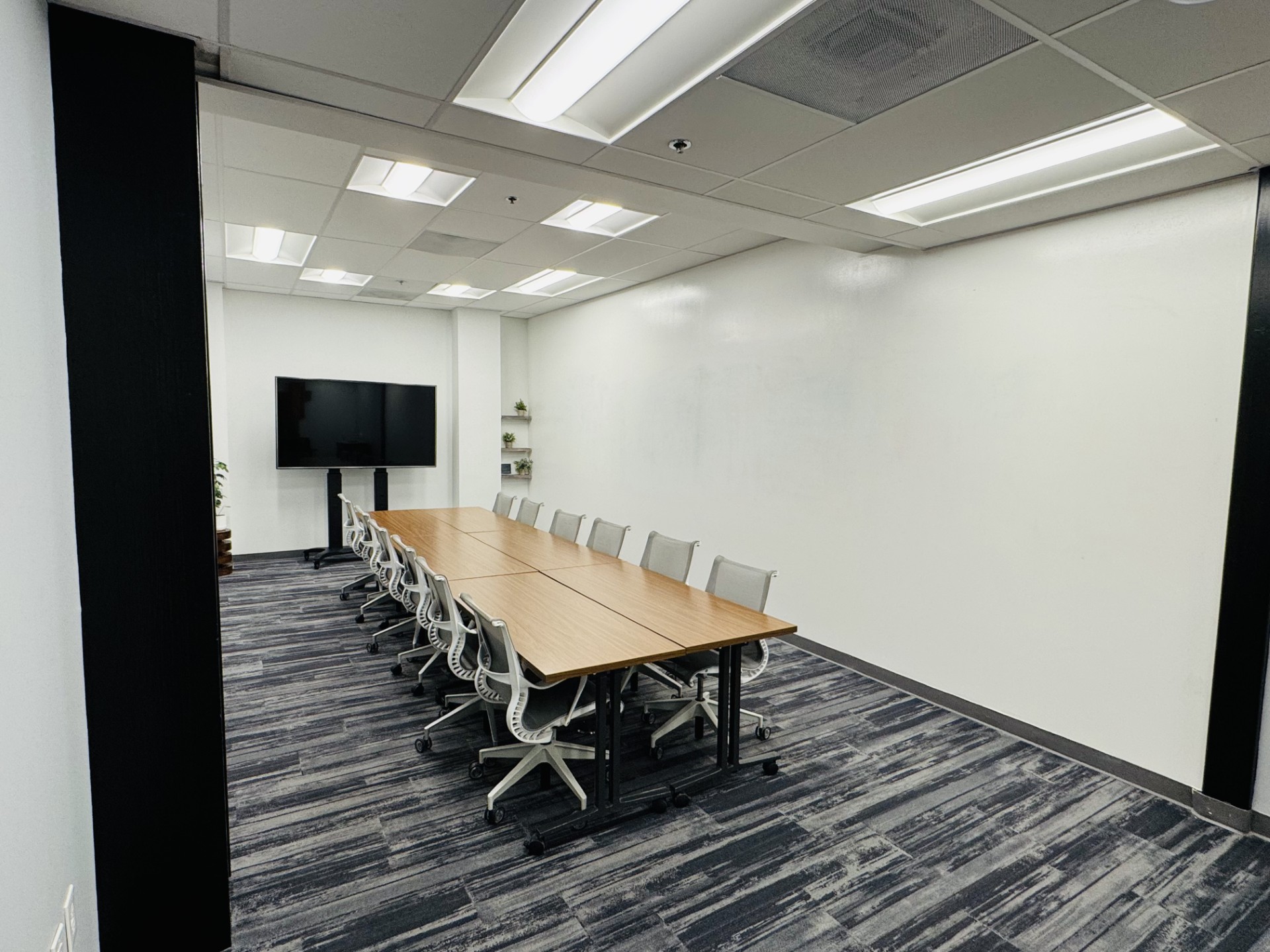
A meeting room rental is a dedicated, fully equipped professional space reserved by the hour or day for collaborative team sessions, client presentations, and board meetings. In 2026, choosing the right meeting room in Folsom matters because hybrid teams across Sacramento County need in-person time that leads to decisions, not wasted hours.
If your team is spread across Folsom, El Dorado Hills, Rancho Cordova, or the broader Hwy 50 corridor, the room itself affects the outcome. A bad room creates drag. A good room removes it. That is why more local operators are moving strategy sessions, client meetings, and planning days out of coffee shops and generic hotel conference rooms and into purpose-built venues like Granite City Workspaces.
What makes a meeting room actually work for strategic offsites?
A strategic offsite works when the room removes distractions and supports focus. The best meeting rooms make it easy to think clearly, share information, and make decisions without fighting the environment.
Too many meetings lose momentum because the room is working against the team. The Wi-Fi is shaky. The screen-sharing setup takes 20 minutes. The room is dark, noisy, or cramped. People start checking email because the environment does not hold attention. That is not a people problem. It is usually a room problem.
A high-performing offsite room should handle the basics without drama:
- Reliable internet
- Easy display connectivity
- Clear audio for hybrid calls
- Comfortable seating for longer sessions
- Whiteboards or writing surfaces for planning
- Enough privacy for sensitive conversations
Granite City’s meeting rooms are built for that kind of work. They are professional without feeling stiff. They are polished without adding friction. Operators can walk in, get laptops open, and get started.
That matters because offsites are expensive even when the room itself is not. If you have six, eight, or 12 people in one room for half a day, every delay multiplies. The right room protects the value of the time you already committed to spend. If you are exploring broader workspace options for your team, our post on traditional lease vs. private office in Folsom offers a useful framework for when flexibility beats fixed overhead.
How do coworking meeting rooms compare to hotel conference rooms or coffee shops?
Coworking meeting rooms usually outperform hotel conference rooms and coffee shops because they remove more friction for local business teams. You get privacy, reliable infrastructure, and business-ready space without the noise of a café or the overhead of a hotel.
Coffee shops seem easy until you try to run a real meeting in one. The background noise rises and falls all day. Seating is inconsistent. Outlets are limited. Confidential conversations stop being confidential the second another customer sits nearby. Even when the coffee is good, the environment is not built for alignment work, budget discussions, hiring conversations, or strategy sessions.
Hotel conference rooms solve the privacy problem, but they often introduce a different kind of drag. The booking process can be slower. The room may cost more than the meeting needs. Parking can feel inconvenient or expensive. Catering minimums and service fees can push up the bill. The atmosphere can also feel generic, which is not ideal when you are trying to create a focused working session rather than host a formal event.
That is where coworking meeting rooms win. They tend to be scaled correctly for the kind of meetings most local companies actually run. You get the essentials that matter and less of the bureaucracy that does not.
The burden-removal difference is practical:
- Coffee shops create distractions you have to manage in real time.
- Hotels add layers like parking friction, hidden costs, and more process than most teams need.
- Coworking venues remove both problems by giving you a professional room that is easier to access and easier to use.
According to SHRM, employers continue to invest in workplace connection and intentional collaboration because engagement and productivity improve when teams have the right conditions for effective in-person interaction (SHRM Workplace Research).

For local operators, there is also a geographic advantage. Instead of pushing everyone into downtown Sacramento traffic or sending a team farther west for a meeting that could happen closer to home, a Folsom location reduces commute drag. That means people arrive with more attention left for the work itself.
If your team is thinking beyond one-off meetings and looking at flexible local infrastructure, our article on satellite offices along the Hwy 50 corridor explains why more companies are choosing distributed local work hubs.
Why are Folsom and the Hwy 50 corridor strong choices for offsite meetings?
Folsom works well for offsites because it is central, accessible, and easier to navigate than larger downtown markets. Teams can meet in a professional setting without turning a half-day strategy session into a full travel day.
Historic Downtown Folsom sits in a practical middle zone for teams coming from El Dorado Hills, Rancho Cordova, Orangevale, Fair Oaks, and nearby Sacramento neighborhoods. That matters. When the drive is easier, attendance is easier. When parking is simpler, arrival is calmer. When the district is walkable, breaks feel useful instead of disruptive.
The Hwy 50 corridor is also becoming more relevant for startups, consultants, and established teams that want proximity to Sacramento without downtown overhead. As we covered in why the Hwy 50 AI Corridor is the best place to grow your startup, the region continues to attract operators who want practical infrastructure and easier access to clients, talent, and partners.
There is also a tone benefit. Offsites in Historic Folsom feel grounded. You are not tucked into a sterile ballroom. You are meeting in a real business district with character, walkability, and nearby dining. If the day calls for extending the conversation after the agenda wraps, our guide to Founder’s Dinner spots for closing deals in Historic Folsom is a good next read.
What logistics should you consider when hosting an offsite in Historic Folsom?
The big logistics are parking, coffee, walkability, and how fast your team can move in and out of breaks. Historic Folsom works because those details are easier to manage than they are in larger downtown or hotel settings.
Parking is the first stress test of any offsite. If people circle blocks, pay unexpected fees, or arrive irritated, the session starts behind schedule before anyone opens a laptop. A Folsom location helps because parking is generally more straightforward than in larger urban cores. Local teams can get in, park, and get upstairs without the long check-in flow or sprawling campus feel that often comes with hotels.
Walkability is the next advantage. Historic Folsom gives your team options without forcing everyone back into their cars. If you need a short reset between sessions, a lunch break that does not eat 90 minutes, or a one-on-one walking conversation after a strategy block, the area supports that naturally. Sutter Street is nearby, so your team can step out for food or continue a conversation without turning the day into a logistics exercise.
Coffee matters more than most planners admit. One weak part of a meeting day is the scramble between sessions when half the group disappears to hunt down caffeine. Granite City has a practical advantage here: Sociology Coffee is in the same building. That keeps breaks short and useful. People can grab coffee, reset, and get back to work without losing the room’s momentum.
Here are a few logistics questions worth answering before you book:
- How many people are driving separately?
- Will anyone be joining remotely?
- Do you want the team to walk to lunch, stay nearby, or keep breaks short?
- Do you need a room that supports long planning sessions, presentations, or both?
- Would same-building coffee improve the flow of the day?
Good logistics are mostly invisible. That is the point. Your team should spend energy on decisions, not on parking, caffeine runs, or figuring out where to regroup after lunch.
How do you prepare your team for a productive offsite session?
A productive offsite starts before the meeting begins. Clear agendas, pre-reading, and a room built for focus help teams use in-person time for decisions instead of information catch-up.
The first step is defining the outcome. What must be true by the end of the session? Maybe the team needs alignment on quarterly priorities. Maybe leadership needs to resolve a blocked initiative. Maybe a client-facing group needs to workshop messaging, staffing, or timelines. If the outcome is vague, the meeting usually drifts.
Once the outcome is clear, set the agenda around decision points. Time-box each section. Assign an owner. Make it obvious what needs discussion and what simply needs review. That is where pre-reading earns its keep. If everyone arrives already familiar with the financials, project updates, or planning memo, the room can be used for discussion rather than silent reading.
Environment matters here too. A room with privacy, strong connectivity, and enough visual tools to work through issues in real time gives your team a better shot at leaving with clarity. That is why a real meeting room in Folsom is different from borrowing a corner of a café or improvising around a hotel conference table.
A short preparation checklist helps:
- Define one primary outcome
- Send pre-reading 24–48 hours early
- Build an agenda with owners and time blocks
- Decide how hybrid attendees will participate
- End with clear next steps, owners, and deadlines
When the room and the preparation work together, the offsite becomes useful fast. If you are ready to line up your next session, explore Granite City’s meeting room rentals for availability, room fit, and booking details. If you have a custom setup or recurring need, you can also contact Granite City directly.
What else should you know before booking a meeting room in Folsom?
What types of meeting rooms are available in Folsom?
Granite City Workspaces offers professional hourly meeting rooms in Historic Downtown Folsom, including rooms suited for team planning, client meetings, and hybrid strategy sessions.
How do coworking meeting rooms compare to hotel conference rooms?
Coworking meeting rooms are usually easier to book, more flexible, and less burdened by hidden fees, parking friction, or catering minimums than hotel conference rooms.
Why is Historic Folsom a good location for an offsite?
Historic Folsom is centrally located for local teams, offers easier parking, walkability to Sutter Street, and convenient coffee and lunch options that keep the day moving.
How should I prepare my team for a productive offsite?
Set a clear objective, send pre-reading before the meeting, build a time-boxed agenda, and choose a room that supports focus, privacy, and collaboration.
Can Granite City meeting rooms support hybrid sessions?
Yes, Granite City meeting rooms are designed to support professional hybrid meetings with reliable internet, presentation tools, and a business-ready environment.
Leave a Reply